
Original source: Meanders Podcast
Original compilation: BlockBeats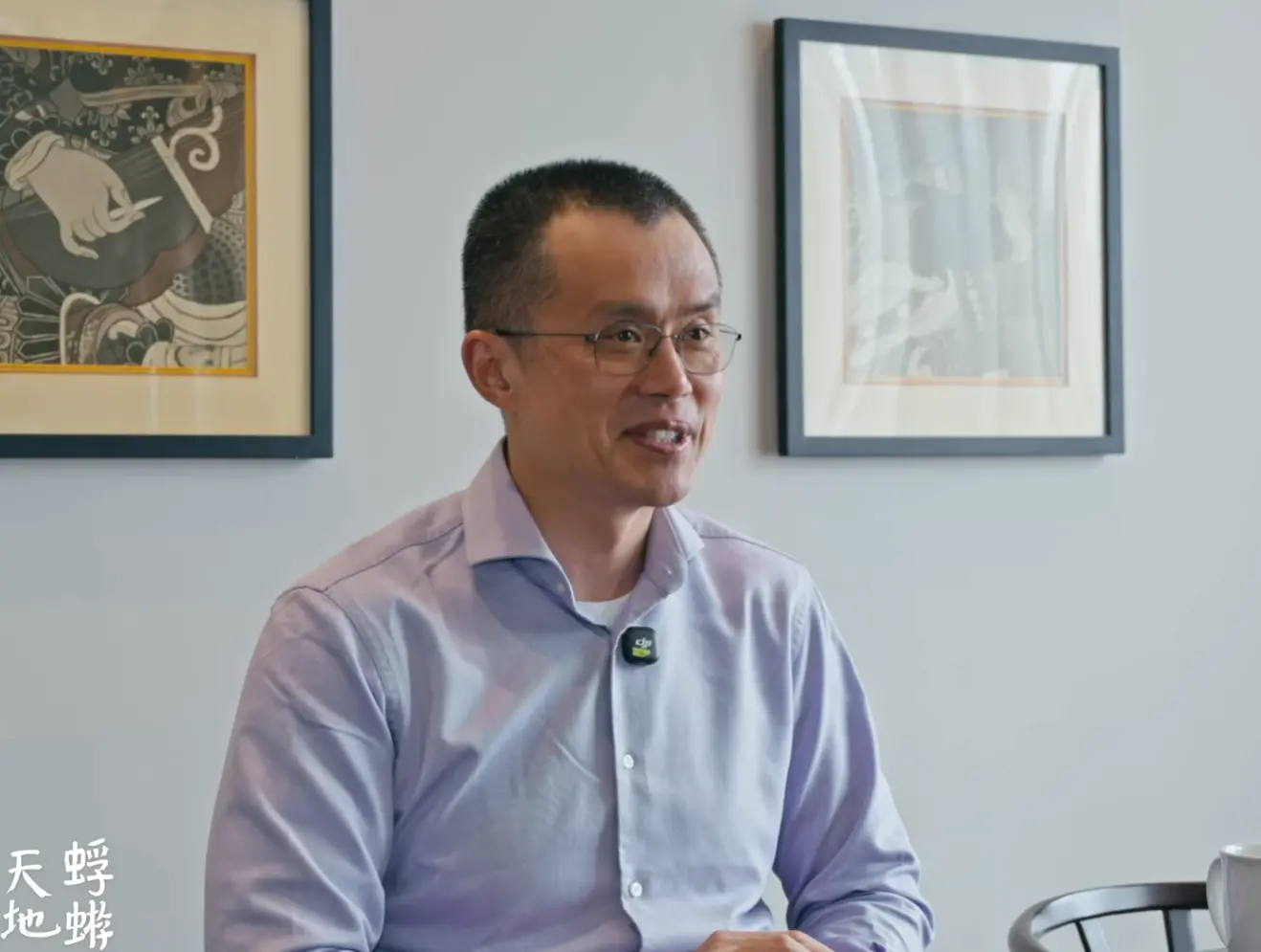
TL;DR:
Chatting in Bhutan, CZ said that he is no longer the busiest, but he responds to messages as soon as he sees them; regardless of the progress, he only keeps people who push forward by themselves, and only has three or five things to do in his mind.
If the global trading platform is redone: US users will not be touched from the first day; contracts and financial products will be earlier and more complete, while some regions will be blocked. What cannot be clearly described in the book "Binance Life" is the mood at that time.
The two most stressful times: IC0’s sharp fall at the opening, and the more than ten months of being stuck in the United States—the real pressure is uncertainty. To resist stress, isolate things, set financial goals, and believe in the simulation theory: do your best and let fate take its course. Founders often underestimate the difficulty, but they also need to be able to change and be passionate; they don’t have to do it just for the sake of peace of mind.
He still believes that Bitcoin has value, but payment and on-chain rights confirmation have not reached the early imagination; RWA and stablecoins were only understood later. I'm still doing things because I feel happy when I help others - Gaoka Academy has grown from more than 100,000 children at the beginning of the year to about 1.2 million now.
CZ appeared on the Meanders podcast to talk about resilience, resilience and lifelong motivation. The full text of the conversation between host Han Yang and CZ is as follows:
Are you busy? How do you reply to messages? How do you take care of things?
Hanyang: I have a little question. Are you tired now?
CZ: Not bad, a little bit, not bad.
Hanyang: Do you think you are one of the busiest people in the world?
CZ: No, I’m definitely not. I think the past few years may have been one of the busier ones, but the past two years should not be so busy.
Han Yang: It’s been three years since I’ve known you. No matter what time I send you a message, you can always reply. It makes me feel like you have no time zone.
CZ: I will reply as soon as I see the message. If I don’t reply to a message after I see it, I will forget about it later. After the meeting, I may take a few minutes to read and respond to messages. I will look at it this way when I wake up in the morning, and I will look at it at night before I go to bed. After chatting with friends for a while, I will take a look. But if I'm doing something serious, I won't look at it. Your message is answered quickly, so I will reply first, otherwise I will forget it.
Hanyang: Do you think you can reply to 500 messages a day?
CZ: Yes, absolutely, definitely more than that. Sometimes after I have just replied to a message, I have to look for a message I have replied to before, and I have to scroll down for a long time. You can reply to many messages within a few minutes.
Hanyang: Then I can imagine that you should be dealing with a lot of things at the same time. How do you make sure your head is keeping up with everything? It’s about where this thing has come, and then where that thing has come.
CZ: I still have a lot of miscellaneous things to do now, and when I was the CEO, I also had a lot of miscellaneous things to do, so I am not very good at keeping track. When someone comes to me, I tell them what they want to do, and then I won’t take the initiative to follow them for a day or a week. I generally don't do this. So I need the people I work with to be proactive, and they need to push you forward. If there needs to be another meeting tomorrow or the day after tomorrow, they need to go to the schedule, not me to find them tomorrow. If anyone works with me and I need to ask them how the project is progressing, I will generally not keep this person. And usually, this project has some problems. So I hope that if this person needs to update tomorrow or a week later, he will send me a message and I will remember it. I need someone who is very self-motivated and proactive. The people around me are more proactive. Another thing that is very important to me: you can remember three or five very important things in your mind, but these three or five things are what I have to do, and then the rest of the things are what they have to do, and they have to take the initiative to report to me.
If we were to redo a global trading platform with today’s experience,
Han Yang: Speaking of three or five things, my second question happens to be related to this. I have written about Binance before and checked a lot of your public statements. What impressed me most was that around 2017 or 2018, you would emphasize that the main idea for Binance was to make it a faster, more user-friendly and more secure company. But looking at what you said in '25 and especially this year, you would emphasize that you probably underestimated legal, compliance and politics to some extent back then. Suppose you took all your current experience and went back to 2017 to re-establish a global crypto trading platform. How many constitutions, or absolutely unshakable rules, would you set for yourself?
CZ: Anyway, looking at the front from the back is hindsight, so you can see it more clearly. I think the first rule is: American users should not touch it. From day one, American users should not touch it. Their definition of a centralized financial platform is: if you touch American users, you need to be regulated by the United States and you need to obtain a license in the United States. They don’t implement this 100% of the time, but they have the right and ability to do so. In addition, looking back now, we still did not execute fast enough in some places. Yesterday, someone asked me on the Internet, don't the two of you conflict? Do you want to be more careful or faster? If you can look back and go back to do some things based on today's experience, you won't hesitate to do some things, and you won't do some things instead.
Hanyang: Can you give an example? What would you not hesitate to do again?
CZ: A lot of very small product features. I might do the contract a little earlier. Even some other financial products may be developed earlier, and financial products will be covered more comprehensively. But some areas must be completely blocked. In addition, communication with supervision may be better. The first thing is that I am not good at this. The second thing is that we are not in the same country. We have to communicate with more than 100 countries, so communication is difficult. So we may do more in this area.
Hanyang: But from a third-party perspective, Binance is already one of the trading platforms that has the most communication with regulators.
CZ: Binance is definitely the most, if not the only one.
Hanyang: But you still feel it’s not enough?
CZ: The coverage is still a bit lacking. And if you really want to do this, the cost will be very high. It’s not just about money, you have to recruit good people, it takes a lot of time, and you have to spend a lot of time managing this thing. When a large group of people are recruited to work on this matter, the CEO of the company may spend a lot of time looking at this matter. These are costs. If you do this, there may be less in the product. Because Binance covers the world, there are many countries that need to communicate. Most companies generally only need to deal with one regulatory agency. The expectations of the regulatory authorities are: Most traditional companies spend 30% of their time on me, and they also expect you to spend 30% of their time on them. But when you spend more than 100 of these 30%, it’s hard. So this thing is not just about adding people. You can't have everyone in every place act on their own. They still have to report to the top. There are still a lot of decisions to be made, so senior management will spend a lot of time. There may be other ways to do this better.
Things I couldn’t explain clearly when writing “Binance Life”
Hanyang: I had a particularly big feeling when I read your "Binance Life". Sometimes when writing about past events, I feel trapped in a feeling of not knowing what to do. Some things are so complicated that I don’t know how to explain them to others. Is there anything that you think was particularly important back then that people today actually underestimate, but it’s hard for you as an author to tell it to readers?
CZ: It definitely feels that way. Sometimes, there is no way to express the feelings at that time. For example, there was a theft in 2019. At that time, coins could not be withdrawn for a whole week, but transactions continued and the entire system was upgraded. I basically didn't sleep for seven days. I slept a little here and there. The engineer basically didn't sleep for seven days, three to five days. The pressure at that time was in the book, but I felt it wasn't expressed clearly enough. There are also law enforcement agencies in a few countries. Some law enforcement agencies are so unreasonable that they even break the law. They used public funds to trade and lost money. Let us pay the compensation. This kind of communication is very stressful. Among these, some are described in the book, and some are not yet in the book. Due to various reasons, they cannot be put in the book yet. So when writing a book, there are always a lot of things that cannot be put into it. Sometimes the description of what is put in cannot be so comprehensive. But that’s all.
Han Yang: I find your answer very interesting. I understand that your answer may be about how a specific thing is underestimated, but it sounds like you feel a certain degree of regret. In fact, it is difficult to express your mood at that moment through words.
CZ: Yes. I feel that my expressive ability is not that strong, and my writing ability is not that strong, so I had a lot of inner pressure or thoughts at that time, but generally speaking, they were not expressed clearly enough in the book. I wrote this book in a relatively simple way because my Chinese, English and Chinese skills are limited, so I used very simple language to describe what happened. At the same time, I don’t particularly want to spend too much writing describing what I’m thinking. I just want the readers to read it and understand for themselves what it was like at that time.
The two most stressful periods of time
Hanyang: Now that you have gone through all this, and look back on everything at that time, which thing do you think really made you very, very stressed?
CZ: I think there are probably two. This one is relatively simple. One is IC0. As soon as trading opened after our ICO was completed, the currency price fell. Those two weeks were very stressful. After that, I went to the United States to deal with the matter in the United States. I was basically stuck there for over 10 months. They told me at the time that when you come, you have to wait six months and then go to jail for another four months. If it's 100% sure, you know what's going on. When I went there, I thought the chance of going to jail was very small, because no one had ever gone to jail for violating the Bank Secrecy Act in the United States. No one had ever gone to jail. I was the only one. We did not commit fraud and no users were harmed. So I thought it was possible that I would be put under house arrest in the United States for a few months. House arrest at home is very simple for me because I usually don’t like to go out. I just need to be able to access the Internet at home. The most stressful thing about America at that time was that there was a lot of uncertainty. I'm not sure if he will let me go in the end, or if he will add another thing, and then another, and keep messing with you. The stress of uncertainty was intense during that time.
Hanyang: So it sounds to me like, did you sleep well?
CZ: I usually sleep well. I haven't slept well these past two days, but I'm in stages. I still sleep well 80% of the time. I usually sleep for 6 hours at night, and I take a nap during the day, which lasts about half an hour or an hour, so it adds up to six, seven, seven or eight hours. Generally rarely to 8 hours, usually 7 hours.
CZ How to resist stress
Hanyang: Before I met you for the first time, I had already written an article about Binance. Many friends have said, if you meet CZ, what questions should you ask him. Most people want me to ask: Binance is a company that is growing so fast. As a founder, you will experience huge changes in a short period of time, and there will be a lot of pressure. They want to know how exactly you handle this kind of stress and transition.
CZ: First, I slept less and more fragmented in the first few years. Sometimes I sleep for three or four hours at night, and the pressure will be a bit greater at that time. But I have always had the habit of napping. If you sleep for half an hour during the day, you will wake up a lot. In addition, regarding this pressure, I don’t know how I developed this character. I am a very pressure-resistant person. Ever since childhood.
For example, if my parents were quarreling at home when I was young, and my sister and I saw them quarreling, both of us would probably be in a bad mood. When the two of us go to school together, my parents' quarrels will affect my sister's mood at school. After I got to school, my friends couldn't tell that I was in a bad mood. They wouldn't notice that my parents were quarreling. My sister’s friend would say, why are you in a bad mood today. Then I will isolate this and isolate the two things. When I was dealing with the company's affairs, many people told me: the first meeting was a very stressful one, including how to negotiate with American lawyers, how to litigate, and how to deal with the U.S. case; the next one might be a product meeting. There may be one or two people who attended both meetings, and they said wow, why did you suddenly become so calm during the product meeting. To me it's just two things, just different things. There is still pressure, and you can definitely feel the pressure, but I usually keep these things relatively separate first.
The second is that in terms of stress resistance, my worldview has always been like this. I rarely set goals for myself. I didn’t say where I must be ranked, how rich I must be, how much money I must earn, how many times I must grow, or what percentage I must grow every year. I usually don’t set goals for these. I just try my best. If the market is not good this year, the company's performance may decline, but I tried my best, I was not lazy, and I made no major mistakes. I do the same thing when dealing with problems. No matter how difficult the problem is, I just try my best to deal with it.
I mentioned in my book that I believe in simulation theory, and I believe that this world is simulated, so it is like a game. Just because it's a simulation doesn't mean the game isn't important. But in this game, I just have to do my best. What else can I do? When I encounter difficult problems, I try my best to solve them; when I encounter simple problems, I try my best to solve them. As long as I try my best, I will leave it to fate to determine the consequences of this difficult question. If I think this way, the pressure will be reduced a lot. There is still pressure, but I just accept my fate. Whatever happens later will happen. You try your best to deal with it. After you deal with it, you can only wait and win.
What founders often underestimate and whether hard work really works
Han Yang: How is your gastrointestinal condition?
CZ: My stomach is fine. My intestines are sometimes not in good condition, but my stomach is fine.
Hanyang: We are very similar. Sometimes if I eat raw fish or something carelessly and it is not particularly fresh, my intestines may feel a little bad, but I have no stomach problems. Because I am increasingly discovering that the more outstanding founders you talk to, the more you will find that stress resistance is a particularly important prerequisite. When people talk about entrepreneurship, they usually talk about PMF and growth, but many people ignore the founder’s ability to withstand stress. In fact, I think in terms of entrepreneurship, products, technology, or IQ, or emotional intelligence, these are easy for everyone to see. But what they don’t talk about a lot of times is the ability to withstand stress. I think as a founder, anyone who is successful has to bear a lot of pressure. As a founder, I would like to ask a question about founders. When you invest now, you will definitely meet a lot of founders, and you are also an excellent founder yourself. What are some things that you think a founder should know—including you who just started your business back then—but maybe someone who hasn’t been particularly successful, who hasn’t experienced this journey, can’t imagine things?
CZ: Most people underestimate the difficulty of doing something. When most people start a business, they always want to say that what they think is an ordinary case is actually a good case. Eighty to ninety percent of startups fail, but as a founder, he is always optimistic. I think the first is to be more optimistic, the second is to withstand the pressure I just mentioned, and the third is to have strong adaptability. Some people are very smart, but sometimes they don't respond. His IQ can be very high, but his ability to change is very weak. He needs a structure, which is difficult to change. But when it comes to starting a business, you not only have to be smart, you also have to be able to change, be able to accept changes, and be able to adjust at any time. In addition, the founder must love what he is doing. If you don’t have this love, you won’t be able to persist in anything else. This thing is too tiring, all entrepreneurship is too tiring.
Hanyang: Just now you also said that you should work hard. So how do you determine what your efforts were when you were working on Binance - there is often a saying, don't use tactical diligence to cover up strategic laziness - how do you determine whether the things you did are macroscopically useful, or are there things that just make you feel at ease and make you feel that I am working hard?
CZ: Anytime you feel like this is just something you’re working on, don’t do it. What you do must be meaningful. If at any time you feel that this thing is just to say that I am happy for myself, there is basically no need to do this kind of thing. You might as well do nothing and take a break. Idleness is also an adjustment. Sometimes when you are tired, you can be idle for a while. This is not laziness. If you don't idle, if you don't take a break, you can't go further. As an entrepreneur, there is no need to lie to yourself. Most investors won't watch you work all day long, etc. So this thing is entirely up to you. Most entrepreneurs don’t need external force to push them. From my perspective, if I have nothing to do, I just listen to books. I don't usually listen to music. I can sit idle for a while sometimes, and that's fine with me.
Hanyang: Can you watch short videos now?
CZ: I do it occasionally, but not too much. I have a benefit, I just brush it, I will feel bored. Because its current recommendation algorithm is too unified, after watching three or four videos, they are all the same, so I won’t be very interested.
Today’s “Consensus” in the Crypto World
Hanyang: Let me ask a question about blockchain. At that time, the pioneers of blockchain and encryption had many imaginations about the entire blockchain world and the encryption world. Some of them were realized, and some were not. The word I am most often mentioned here is consensus. My own experience is that everyone’s consensus on consensus has actually changed a lot in the past 10 years. Do you think today, especially for you, when we talk about the consensus on the encryption world and the blockchain, what does this consensus refer to? What do you still believe in? Is there anything you feel we haven’t done well enough?
CZ: The word consensus has a rather special definition in blockchain: Blockchain is the first time humans have a technology that allows a group of people to not trust each other, but can maintain a set of ledgers together. In this case, this is a consensus. In addition, based on some consensus on the industry, I think some have been achieved and some have not been. The core thing to achieve is: Bitcoin has never disappeared. Bitcoin has value. Whether it is a currency, whether it is a currency or a commodity, others add this to it. Each country can add different labels to it, but it is a valuable thing, it has a purpose, and it has value.
And then the industry just kept growing. This is a new money technology. So there is no problem with this thing from the lowest level. Some consensuses never occurred. For example, payment, payment is still very small now. It didn't happen at all, but not to the extent that we imagined that in about ten years it would be used to pay everywhere. This is also because the current payment system is pretty good in most countries, and most people do not make cross-border payments. The group of people doing cross-border payments is slowly growing. And then some things didn't materialize either. For example, because this is a consensus mechanism, should the government use blockchain for real estate certification? It will be much easier with blockchain. Anything that requires authentication can be blockchainized. It seems that this is not implemented very much at present. It does not mean that it cannot be realized in the future, but the current implementation progress is not particularly great.
As for the blockchain itself, I think performance improvements and so on are still too slow. To build a new blockchain, it is difficult to upgrade new technologies to Bitcoin. Because once you upgrade Bitcoin, community voting may lead to forks, etc., so the upgrade of Bitcoin is relatively slow. But because it upgrades slowly, it is particularly stable, which is also an advantage. So there are advantages and disadvantages. So in the ideas of many of our early people, many were realized and many were not. But the entire industry continues to develop, and many things are happening that we can’t imagine. Regarding RWA, in fact, even a year and a half ago, I would have been a little skeptical about whether RWA could succeed, but now it is growing very fast.
To be honest, I might have been a little skeptical about stablecoins five years ago. I didn’t fully understand how long stablecoins could run. Stablecoin It has the purpose of stablecoin. So things like these are things we never thought of before. Something I hadn't thought of before.
Who is underestimated outside the industry?
Hanyang: Because when everyone mentions blockchain, they will mention several names, such as you, Yijie, and Vitalik. Do you think that in your eyes, you must have thought about a lot of people, including when you wrote the book. Are there any people who are underestimated by people outside this industry? For example, he is very important to this industry, but people outside the industry don't actually know him. Or are there some incidents like this?
CZ: Yes. I haven't thought about this question carefully, but it must be there. There are many technical people who gradually lost their voice - or they were more active in the early days but less active now. Especially the Bitcoin core developer. In the beginning, there were about a dozen people who interacted with Satoshi Nakamoto via direct email. There are probably several people here who are launching their own projects, etc. Some are successful, some are not so successful, but several people have slowly retired. These people actually have a lot to contribute. There are also many entrepreneurs who may have started a business in the early stage and then made a considerable contribution to the industry, but the company was sold or changed hands. Just like at that time, there was a young man in Blockchain info who started Blockchain info at the age of 22. At that time, it was the largest Bitcoin website with the largest traffic in the industry. At that time, the Bitcoin block explorer was also a wallet for you to check transactions, and it was still very popular at the time. This guy’s name is Ben Reeves. Later, he - he was a very introverted person, so he later slowly sold the company to others and exited. He's an Englishman, and then he's relatively quiet. I estimate that if we really wanted to dig out these people, we might be able to dig out hundreds of them.
The reason why I’m still working now
Hanyang: I have one last question. What do you think still inspires you to continue working today? Because you don't have to work at all, but now you are obviously not one of the busiest people, but you are still a very, very busy person. What do you think makes you happy?
CZ: I think that as humans live, we must be looking for happiness. We could play golf all day, be at the beach all day, and these things would be boring. Doing it occasionally will make you happy, but it won't necessarily happen all the time, and you won't necessarily be particularly happy if you do it 100% of the time. In my understanding, any animal that can help our fellow species will be very happy. This is how our genes are designed. If it does not help others of its kind, the combat effectiveness of this entire race will be relatively weak and it may be naturally eliminated. Therefore, our genes are naturally selected: when we can take care of ourselves, when we can take care of our own kind, and when we can take care of others, we will feel very happy inside. You don't have to worry about whether others say thank you or not. At least for me, that's what I think. So this is how we are designed in our genes. This is a very low-level thing. Then how do you use this thing? For me, if I do something that I think will help a lot of people, I will be happier. This thing has nothing to do with making money or fame. I feel that if I do this, I will be happy.
Just like why I still spend so much time building this free education platform, Gao Academy. This makes me happy every time I have a meeting with them. I heard that we are teaching 1.2 million children now, and at the beginning of the year there were only about a hundred thousand children. When I heard this number and looked at this APP, I was very happy. So why did I do it? Just because I'm happy. What else makes me happy? I am happy when I eat good food, but I cannot eat too much of the good food. If I eat too much, I am already too fat. There are many things that you can do that are limited, but if you do something that contributes positive energy to society and mankind, it is basically unlimited. It's limited only by my energy and my time. Then let me try my best and do as much as I have time.
Han Yang: Is your waist feeling better now?
CZ: My waist is much better now. I had two surgeries, two minor surgeries, for lumbar disc herniation. It took about two years to slowly recover and recover. Now I still feel discomfort in my waist after sitting for a long time, and my waist still feels weak when I move. It is still weaker than normal people. But when I recover to a certain extent, I can go skiing, I can go kitesurfing, and now I can sit here and interview for an hour or two and I can handle it. But most of the time when I work at home, when I make phone calls at home in the morning, I lie on the bed with a small stand on the bed and put the computer on my body.
Fixed ending of the program: which building to leave behind
Hanyang: All our interviews end with the same question: If you were to choose one building in the world to model and leave it forever, which building would you choose? This one is not mine, you can choose whatever you want. A lot of people choose their own room, their own school, everything.
CZ: I’m not an expert on this. I think many buildings are of great modeling significance, but from my point of view, the older they are, the more modeling significance they have, because the older they are, the more likely they are to break down. Like the Acropolis of Athens in Greece, and then Machu Picchu in Peru, South America, which I have never been to. I've also visited Greece. And then in India, they say Seven Wonders of the World, Taj Mahal. I think these things are just that - but these things, in turn, have been modeled by many people. But I think the quality of your modeling is still quite high, and it doesn’t matter if you build it a few more times. Just like we are in Bhutan now. In fact, if you look at the buildings outside of Bhutan, they are very culturally rich, and there are many old buildings. I think these are quite good. So I don’t think I’m an expert on this, so I’ll just talk about it casually.
Han Yang: OK, thank you.
CZ: Thank you.